Start with the clothes, then add the character
An everyday outfit is a useful costume base: your child already knows how it feels to sit, walk and put on a coat in it. Choose one of these three ideas together, check the supplies you actually have and leave anything uncomfortable out. There is no need to buy a complete outfit to make the character recognizable.
The quantities below depend on the child and the clothing. Try a small piece of tape on an inconspicuous area first, because adhesives can mark fabric. An adult should handle scissors and any cutting of cardboard. The aim is a fun afternoon project, not a perfect replica.

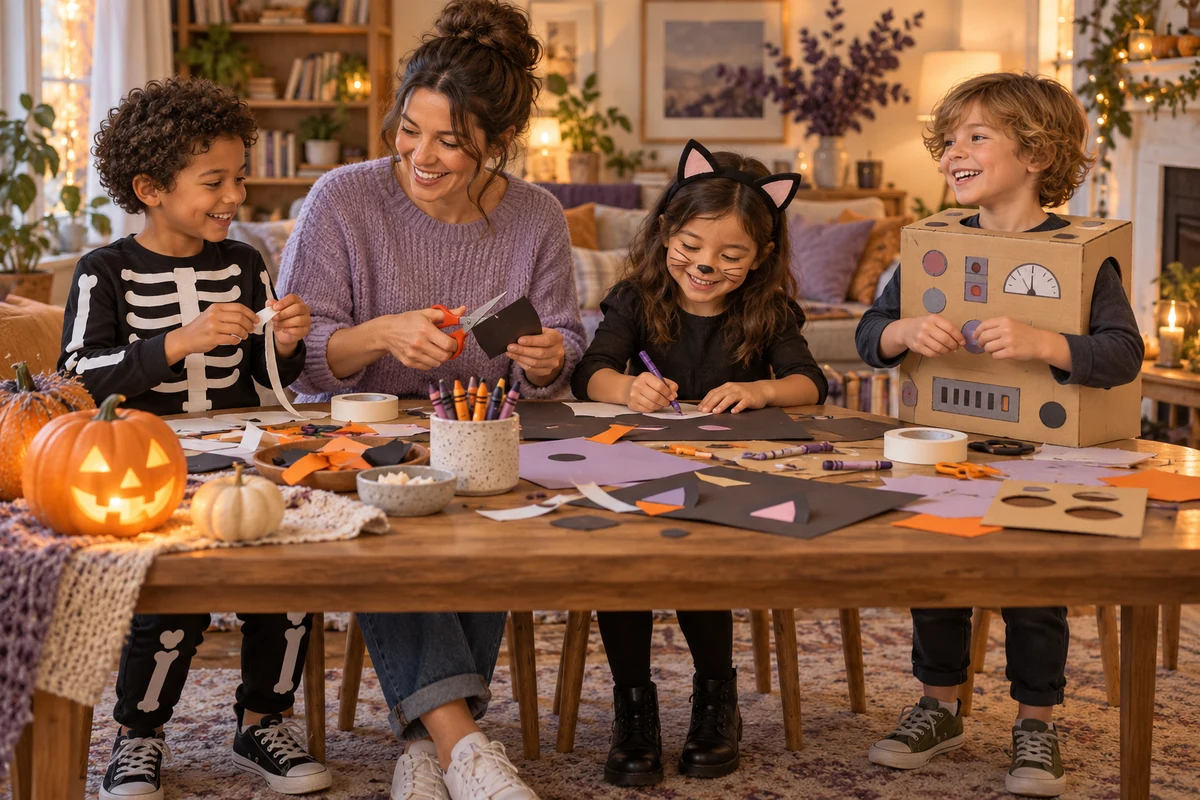
1. A white-tape skeleton
Gather a black or dark long-sleeved top and trousers, white removable tape, paper and scissors. Lay the clothes flat. Arrange a short vertical strip down the chest with a few paired strips curving out like ribs; add short strips along the arms and legs. Keep joints free so the clothes bend easily. If tape does not suit the fabric, draw the bones on paper and attach them using a method appropriate for the garment and the child.
Let the child decide whether the skeleton is friendly, dancing or sleepy. A few clearly placed bones communicate the idea; a complicated anatomy lesson is unnecessary. Keep the face uncovered. For a child who dislikes the feel of added decoration, put the design on a loose outer layer they can remove.
2. A black cat with paper ears
Use dark comfortable clothes, a strip of stiff paper or an existing comfortable headband, and two folded paper triangles. An adult can help attach the ears securely to the band, away from the eyes. Draw inner-ear shapes with a crayon. The outfit works without face paint, a mask or a tail.
Ask the child to turn their head, look down and put their hood on before deciding that the band fits. Skip anything that slips or pinches. A younger child can choose the ear colours while an adult assembles the band; an older child may enjoy making their own pattern. Do not tie a costume accessory around the neck.

3. A lightweight cardboard robot
Find a light, clean cardboard box that gives the wearer ample room to move. An adult should make the openings for the head and arms and remove rough edges. Draw a few large buttons, a dial and a pretend screen directly on the cardboard. Avoid heavy attachments, sharp foil edges, a head-enclosing box or small loose decorations around younger children.
Try the torso over the clothes and coat the child will actually wear. They should be able to see their feet, move their arms, sit comfortably and remove the costume easily. If the box catches on furniture or makes walking awkward, use a flat cardboard control panel on an ordinary top instead. It is still a robot.
Try the doorway test before leaving
Walk through a doorway, take a few steps, sit down and pick up a bag while wearing the finished costume. Shorten anything that drags and remove anything that blocks the face. Health Canada recommends well-fitting costumes, unobstructed vision and bright or reflective elements. Dark skeleton and cat outfits need particular attention to being seen outdoors; add reflective details and carry a light.
Keep costumes away from candles and other flames; use a flameless light for the pumpkin. Choose comfortable footwear and an adult-supervised plan appropriate to the child. These are practical adaptations of Health Canada’s Halloween safety guidance, rather than a promise that a homemade costume has been safety tested.

Keep the evening easy
Photograph the creation if the child wants a keepsake, then let them change their mind about wearing it. A familiar coat over a costume does not spoil Halloween. A paper-ear cat, a few skeleton ribs or a robot panel can be enough for a child who prefers a quieter version.
For another small household coordination task, see our family calendar handover guide. This is original Parents.ltd activity guidance; adapt materials and supervision to the child rather than treating an age label as a guarantee.