A list can be correct and still confusing
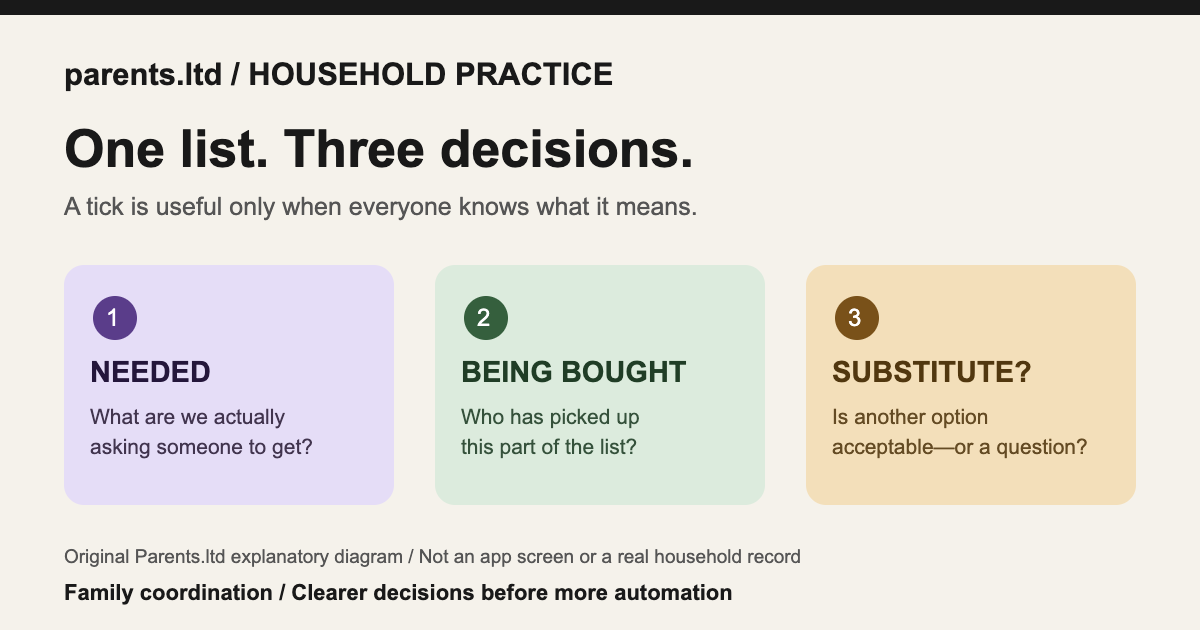
A shared shopping list can contain every item and still leave people unsure what to do. One person ticks something when they put it in the basket; another ticks it when they remember it is needed. A third uses a tick to mean someone else will handle it. The same mark is carrying three different decisions.
Before changing apps, try a small household exercise: agree what each state means. This is original Parents.ltd editorial guidance about communication, not a claim about a tested account feature or an available automated shopping service. Use a fictional list first, without personal routines or private purchase details.
Define the item before assigning it
“Milk” may be enough in one household and incomplete in another. Decide which details matter for the example: quantity, size, an agreed type or a note that the existing supply should be checked. Do not demand a long specification for every ordinary item. The useful detail is the one that would change the decision at the shelf.
Keep preferences separate from requirements. For example, “preferred brand, another option is fine” differs from “please ask before choosing an alternative”. Dietary, medical and other specialist requirements belong in the household’s appropriate informed process; a generic shopping guide should not choose substitutions for them.
Make taking responsibility visible
Agree how someone indicates that they are working on part of the list. A simple “I am getting these three items” may be enough. It should be distinguishable from an item already bought. Otherwise, a second person can see an unticked line and buy it again while the first person is still shopping.
Use a process the participants can actually keep current. An extra status is not useful if it takes more effort than the task and everyone ignores it. For a short list, a dated note or a brief message may be sufficient. The point is an understandable decision, not a particular number of buttons.
Treat a substitute as a decision, not a silent edit
Choose what happens when an item is unavailable. The list might allow an ordinary alternative, ask the shopper to contact the requester or leave the item unresolved. A crossed-out line should not suggest the requested purchase is complete when someone still needs to decide what happens next.
In a fictional example, the household asks for a particular kind of notebook. If it is missing, a different cover colour might be acceptable, while a different page format might need a question. State that distinction before shopping when it matters. This example demonstrates communication, not a recommendation for a specific product.
Close the list when the purchase reaches home
Decide what “done” means for this household exercise. An item may be purchased but not yet available to the person expecting it. If that distinction matters, agree how the shopper communicates an incomplete collection, a return or an item left at another location.
Review the example afterwards. Which line caused a question? Was the quantity unclear, the responsibility unspoken or the substitute rule missing? Adjust that detail rather than assuming the family needs another tool. Keep unresolved items visible, and remove completed duplicates carefully so the next reader knows which list is current.
Ask a useful question of any future tool
If you compare digital tools later, ask how they represent needed, being handled and completed items. Check whether participants understand the same labels and whether edits are visible in the actual version you are considering. Do not infer synchronisation, privacy settings or offline behaviour from a promotional image.
From the IAM perspective, useful digital experiences begin with a clear human decision. A household list is a small place to practise that. The result of this exercise is a more specific question about your process, not a promised saving, a measured family outcome or evidence that automation has solved the task.
Try the three-state check
For each line, ask: what is needed, who is handling it and what happens if it is unavailable? Use your existing household method, keep the audience appropriate and leave unanswered decisions visible.
Related resources and editorial scope
For a different coordination task, read the family calendar change handover guide. Explore Parents.ltd resources or our company page. This is original practical editorial analysis, not professional dietary, financial or medical advice and not a product feature announcement.